
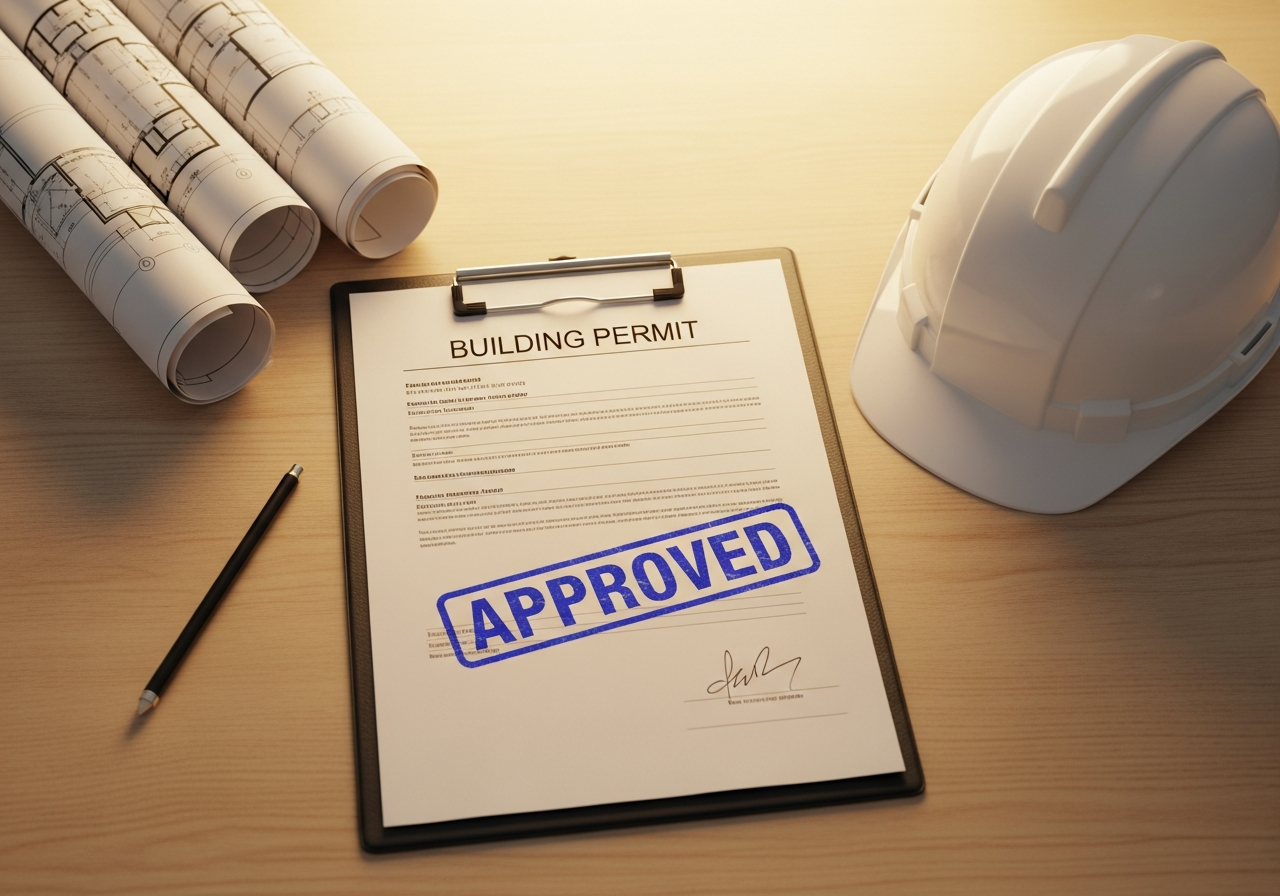
Work Without a Permit: Legalizing Unpermitted Work
Work done without a permit doesn't go away on its own, even if a previous owner built it. It shows up in title and lien searches and can delay or stop a sale or a refinance.
First we check whether the work is among the jobs that don't require a permit or whether it has to be legalized. If it needs a permit, the usual path is an after-the-fact permit: as-built plans, engineering letters where needed, corrections where the work doesn't meet code, and inspections.
For the full legalization process, including open permits and pre-sale permit searches, see our legalization page. Common examples of unpermitted work:
- Enclosed patios and terraces
- Carports that were closed in or converted
- Roof-overs built without a permit
- Pools built without a permit
- Illegal efficiencies: a separate living unit added without approval
Code Violation Notices and Stop Work Orders
A code violation notice means the city or county found something on the property it considers out of compliance, such as work done without a permit or a permit that was never closed. A stop work order halts construction until the permit issue is resolved.
In Florida, code violations can accrue daily fines and become liens against the property, so it pays to act early. We build the plan for the construction and permitting side: what needs plans, what needs a permit, what needs to be corrected, and which inspections close it.
Fines and liens are decided by the city or county. Any reduction or release is requested from them once the property is in compliance. We don't give legal advice and can't promise an outcome, a timeline or an amount. For legal advice on a lien or a hearing, talk to an attorney.
After-the-Fact Permits
An after-the-fact permit is the official way to have work that was built without a permit reviewed, inspected and approved by the city or county. When people talk about legalizing a property, this is usually the process they mean.
We prepare the plans and drawings for after-the-fact permits in-house, submit the application, respond to the reviewers' comments and coordinate the inspections. If the work is hidden behind walls or ceilings, we work out with you what the jurisdiction will need to see before it can approve it.
In Miami-Dade, county-wide guidelines in force since January 2026 add a signed and sealed certificate to this process. It is explained below.
Open and Expired Permits
A permit stays open when the work never received final approval, most often because the final inspection was never called in. If too much time passes without an approved inspection, the permit also expires.
Lenders and title companies often flag open permits during a sale or refinance. And when you buy a property, you inherit its open permits, including those pulled by previous owners.
We search the records of every jurisdiction involved, list each permit and sub-permit that isn't closed, and build the plan to close them: renew or reactivate expired permits, transfer a permit when the original contractor is gone, finish or correct the work, and pass the final inspections. Our guide on how to close an open permit in Miami-Dade walks through each step.
Garage Converted Without a Permit
A garage that was enclosed and turned into a bedroom, an office or living space without a permit is unpermitted work like any other. It can surface in a code violation notice or in a buyer's permit search.
There are two ways out: legalize the conversion so it stays, or restore the garage. Which one is possible depends on the property and the local code. We review the space and the records, explain what each path requires, then prepare the plans and handle the permit and inspections for the one you choose.
40/50-Year Recertification and Unsafe Structure Notices
For condominium and commercial buildings, two notices call for a specific response: the 40/50-year recertification notice and the unsafe structure notice. Both lead to inspections and reports by licensed professionals and, where repairs are needed, to repair permits. We handle the permits for those repairs.
Broward County's 40 Year (and Older) Building Safety Inspection Program brochure lists single-family homes and duplexes, and buildings under 3,500 square feet, among its exemptions (source).
Rules differ by county and by building, so read your notice and your county's program for your specific case.
The 2026 Work Without Permit Certificate in Miami-Dade
Since January 2026, Miami-Dade's county-wide guidelines require a Work Without Permit Certificate signed and sealed by a Florida-licensed engineer or architect.
The guidelines come from the Miami-Dade Board of Rules and Appeals (BORA). Its Secretary sent them to all building officials in a memo dated January 26, 2026, titled "Work without Permit (WWP) Guidelines for Architects and Engineers", after BORA unanimously endorsed them at its January 15, 2026 meeting. They apply county-wide, in every municipality, to residential and commercial work. Read the BORA memo.
CORE GROUP was founded by an architect, Maria Paula Marin. Our team of architects, designers, permit specialists and project coordinators prepares the plans and drawings in-house and runs the permit with the city or county, in English or Spanish.
Under the guidelines, a work-without-permit file includes:
- A certificate prepared, signed and sealed by a State of Florida licensed Professional Engineer or Registered Architect, based on a direct inspection of the work, with a narrative of the methodology
- Full documentation of the work and the minimum permit documents
- A Hold Harmless Agreement signed by the owner
- An affidavit for each trade
- Not covered by the guidelines: missed inspections on permitted work, and work begun before March 1, 2002
Permit Expediter Services
Not every case starts with a violation. As permit expediters in Miami-Dade, Broward and across Florida, we manage residential and commercial permits from application to final approval: complete submissions, permit revisions after reviewer comments, HOA approvals and inspection coordination.
Permitting work correctly from the start is how you keep it off a violation notice. See our permit management services.
How It Works
One process, from the notice to the closed permit, documented with the city or county.
Review the records and inspect
We research municipal records for open permits, expired permits and violations, go over the notice with you and inspect the work.
Build the plan
We define what's needed: as-built plans, engineering letters, corrections, the after-the-fact permit application and, where Miami-Dade's guidelines apply, the signed and sealed certificate they require.
Prepare and submit
We prepare the plans and drawings in-house, put the documents together, submit them and respond to the reviewers' comments.
Coordinate inspections
We schedule the required inspections and follow up with the building and code enforcement departments.
Close and document
We follow up until every permit is closed and the violation is resolved, with the paperwork to prove it. With the property in compliance, you or your attorney can take up any fines or lien with the city or county.
Where We Work in Florida
We help with code violations and after-the-fact permits across Florida: in Miami-Dade, Broward, Palm Beach, Osceola, Orange, Hillsborough and Duval counties, and in Gainesville. On every case we work with the building department and the code enforcement office that have jurisdiction over the property, whether that is the city or the county.
Cities we serve, with a local page for each: Miami, Hialeah, Doral and Homestead in Miami-Dade; West Palm Beach in Palm Beach County; Orlando in Orange County; Kissimmee in Osceola County; and Tampa in Hillsborough County. We also work in Miami Beach, Fort Lauderdale, Hollywood, Pembroke Pines and Jacksonville.
Legalization requirements by jurisdiction: City of Miami, Hialeah, Doral, Miami Beach, unincorporated Miami-Dade County, Fort Lauderdale, Hollywood and Pembroke Pines.
The 2026 Work Without Permit Certificate described above is a Miami-Dade County guideline and applies only there. In Broward, Palm Beach, Central Florida, Tampa Bay, Jacksonville and Gainesville, we follow the after-the-fact process of the city or county that has jurisdiction.
Service Areas
Frequently Asked Questions
I got a code violation notice on my door. What do I do?
Don't ignore it. Note the deadline and the hearing date, if there is one, and keep a copy. Then find out what the notice is about: it may be work done without a permit or a permit that was never closed. Call us with the notice in hand. We research the records, inspect the work and tell you what it takes to fix the construction and permitting side. For legal questions about a hearing, talk to an attorney.
Can I sell a house with unpermitted work in Florida?
Unpermitted work and open permits show up in title and lien searches, and they can delay or stop a closing. Whether a sale goes ahead depends on the buyer, the lender and the title company; for the legal side, ask a real estate attorney. Legalizing the work before you list avoids last-minute surprises.
How do I close open or expired permits before closing?
Find every open permit on the property, in every jurisdiction involved, and check the status of each one. Expired permits must be renewed or reactivated before inspections can be scheduled; if the original contractor is gone, the permit generally has to be transferred. Then the remaining work is finished or corrected and the final inspections are passed. If you have a closing date, tell us when you call.
How do I legalize an illegal efficiency?
First, find out whether the unit can be legalized where the property sits: that depends on the city or county rules. If it can, it goes through an after-the-fact permit, with plans of the unit as built, any required corrections and inspections. If it can't, the alternative is to remove the unit and restore the space. We review the property and the records before you spend money on either path.
How do I stop daily fines or remove a code lien?
Fines and liens are decided by the city or county, not by us. In general, the first step is bringing the property into compliance; any reduction or release of fines or a lien is then requested from the city or county under its own procedure. We handle the construction and permitting work that gets the property compliant. We can't promise an outcome or an amount, and for legal advice on a lien, talk to an attorney.
My garage was converted without a permit. Can I keep it, or does it have to go back to a garage?
It depends on the property and the local code. Some conversions can be legalized with an after-the-fact permit; in other cases the garage has to be restored. We review the space and the records and explain what each path requires before you decide.
Do you only work in Miami?
No. We help with code violations and after-the-fact permits across Florida: Miami-Dade, Broward, Palm Beach, Osceola, Orange, Hillsborough and Duval counties, and Gainesville. Every city and county runs its own building department and code enforcement process, so we start by confirming which one has jurisdiction over your property.
What is the 2026 Work Without Permit Certificate in Miami-Dade?
Since January 2026, Miami-Dade's county-wide guidelines require a Work Without Permit Certificate signed and sealed by a Florida-licensed engineer or architect. The certificate is based on a direct inspection of the work and includes a narrative of the methodology. The guidelines were endorsed by the Board of Rules and Appeals (BORA) and apply in every municipality, to residential and commercial work. They exclude missed inspections on permitted work and work begun before March 1, 2002.
Have a Violation Notice or an Open Permit?
Call us at (954) 880-9760 or tell us about your property with the form below. The first consultation is free.
Call (954) 880-9760Tell us about your property
Share your project details and any plans, photos, or documents - we'll review and respond quickly.