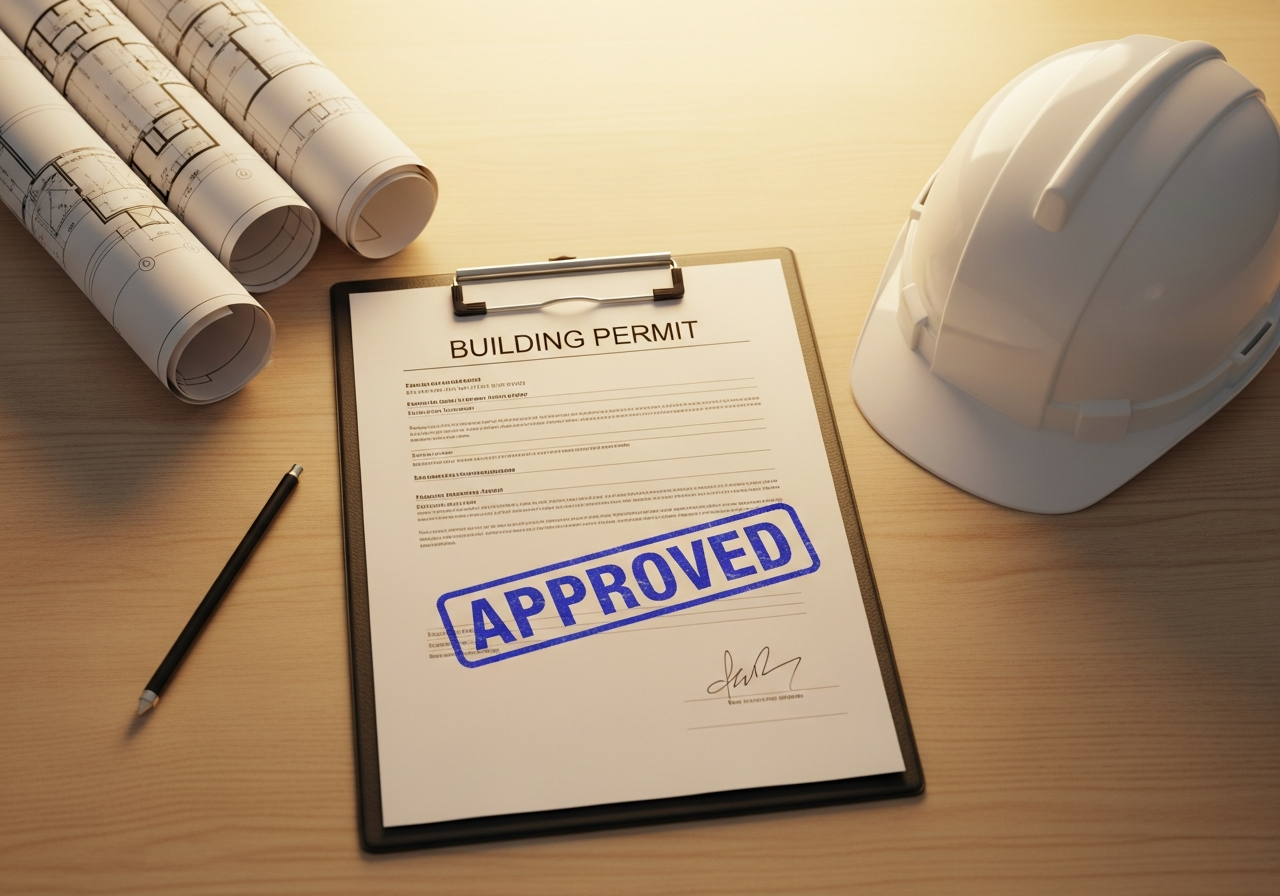
In Florida, the roof is the most regulated part of a house — and for good reason. Hurricanes turn weak roofs into catastrophic losses, so the Florida Building Code sets some of the strictest roofing standards in the country, and permits are how those standards get enforced.
The short answer: virtually every re-roof in Florida requires a permit, and so do most repairs beyond a small patch. This guide covers when a roof permit is required, the hurricane-driven rules that make Florida different, what inspectors check, and why skipping the permit can cost you your insurance coverage.
Roofing Work That Requires a Permit
Plan on a permit for any of the following, in every Florida jurisdiction:
- Full re-roofs — tearing off and replacing shingles, tile, metal, or flat roofing on any home.
- Roof-overs and recovers — installing a new layer over an existing one, where the code even allows it.
- Repairs beyond the local threshold — many jurisdictions permit only very small repairs without a permit; once you're replacing more than a set area (often around 100 square feet or a percentage of the roof), a permit is required.
- Structural work — replacing decking, trusses, or rafters, or changing the roofline.
- Rooftop equipment — solar panels, skylights, and new penetrations typically require their own permits.
What's Usually Exempt
Replacing a few blown-off shingles in kind, sealing a minor leak, or cleaning and coating are generally exempt. But Florida's repair thresholds are low, and hurricane-damage repairs frequently exceed them. When in doubt, ask before the tarp comes off.
Why Florida Roof Permits Are Stricter Than Anywhere Else
Florida's roofing rules were rewritten after Hurricane Andrew and have tightened ever since. A permitted re-roof triggers several requirements that make your roof — and your insurance position — dramatically stronger:
- The 25% rule — if more than 25% of a roof section is repaired or replaced within 12 months, the whole section generally must be brought up to current code.
- Roof-to-wall connection upgrades — re-roofs on older homes can trigger required retrofits like hurricane straps or clips, especially for higher-value homes.
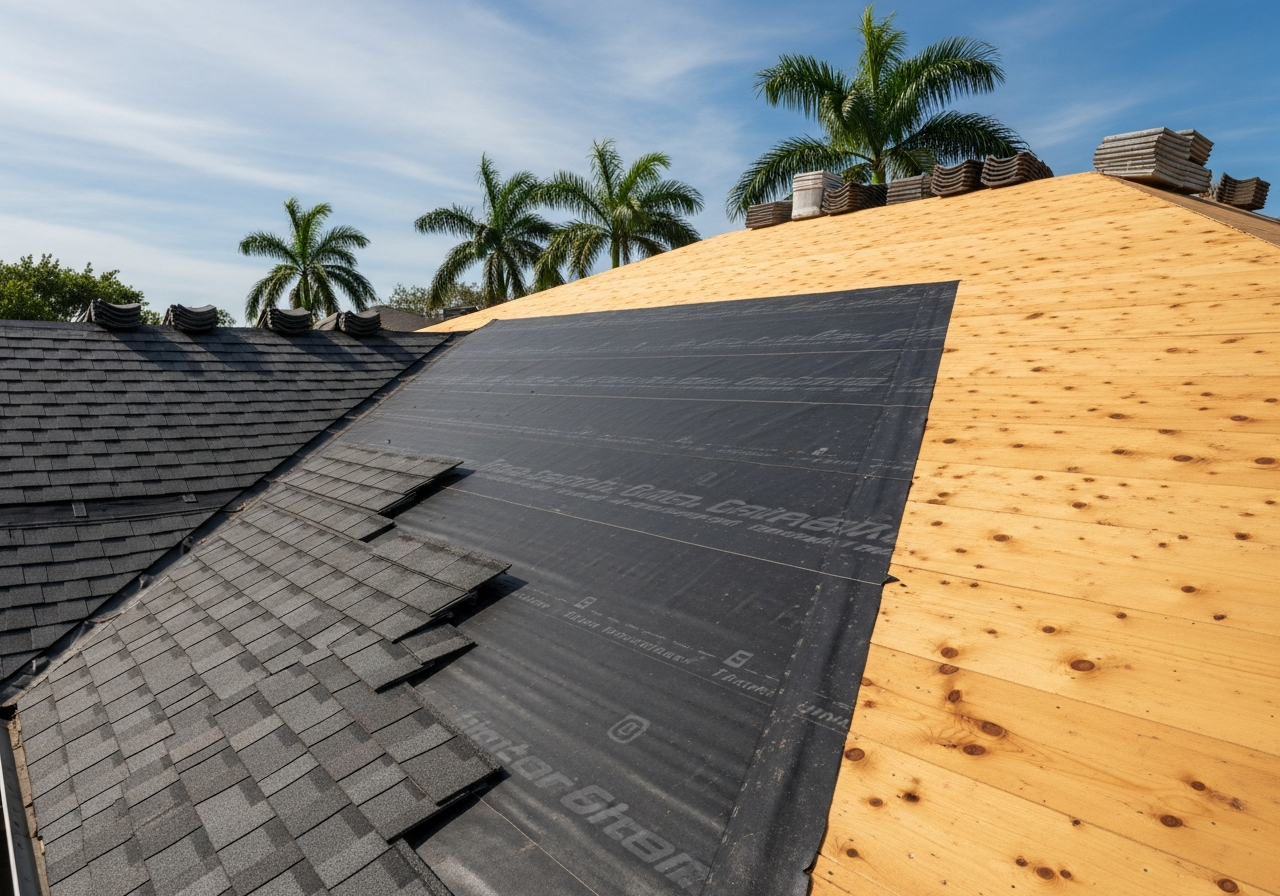
- Secondary water barriers and nailing schedules — current code requires sealed roof decks and enhanced nailing patterns verified by inspection.
- Product approvals — every shingle, tile, underlayment, and fastener must carry a Florida or Miami-Dade product approval matched to your wind zone.
- Mitigation verification — the in-progress inspection documents exactly the features a wind mitigation report needs to earn insurance discounts.
The Insurance Connection
Nowhere is the link between permits and insurance tighter than roofing. Florida insurers routinely ask for the roof's permit date to determine its official age — an unpermitted re-roof often doesn't count, leaving your 5-year-old roof rated as a 20-year-old one, which can mean non-renewal or actual-cash-value-only coverage.
Worse, if a storm damages a roof that was replaced without a permit, the carrier can challenge the claim. The permit and its final inspection are your proof that the roof was installed to code. No document does more to protect the single largest claim risk on your home.
What the Permit Process Looks Like
A Florida roof permit is usually contractor-pulled: state law requires a licensed roofing contractor for most roofing work on homes you don't personally occupy as owner-builder. A typical package includes the permit application, the product approval numbers for every component, a Notice of Commencement for jobs over the state threshold, and — for some jurisdictions — a roof plan or uplift calculations.
Expect at least two inspections: an in-progress (dry-in/nailing) inspection while the deck and underlayment are exposed, and a final inspection when the roof is complete. Missing the in-progress inspection is the most common roofing permit failure — the inspector can't verify nailing through finished shingles.
Replacing Your Roof? Get the Paper Trail Right
A roof permit isn't red tape — in Florida it's the document that sets your roof's official age, unlocks insurance discounts, and protects your biggest claim. It has to be pulled before work starts and closed with a final inspection to count.
At CORE GROUP we handle permit management across Florida: we verify the code requirements for your roof and wind zone, assemble the documents and product approvals, and manage the permit through final inspection so your new roof is fully on the record.