
Pouring a driveway seems like straightforward flatwork — but in Florida, driveways sit at the intersection of three sets of rules: your city or county's building code, its zoning and drainage standards, and the public right-of-way where your driveway meets the street.
That's why most Florida jurisdictions require a permit for a new driveway, a widening, or a change of material — and a separate right-of-way permit for the apron section between your property line and the road. This guide explains when a driveway permit is required, what reviewers look at, and the mistakes that get driveways cited or torn out.
Driveway Work That Requires a Permit
The threshold varies by city, but the following projects require a permit almost everywhere in Florida:
- New driveways — any new vehicle-use area, whether concrete, pavers, asphalt, or gravel where allowed.
- Widening or extending — adding a parking pad, a second lane, or extending toward the street or side yard.
- Replacing or changing material — a full tear-out and repour, or switching from concrete to pavers, usually triggers a permit even in the same footprint.
- Circular driveways and new curb cuts — a second connection to the street requires right-of-way review and often a traffic-safety check.
- Driveway aprons — the section between your property line and the road sits in the public right-of-way and needs its own permit in most jurisdictions.
What's Usually Exempt
Sealing, resurfacing a thin overlay, or repairing small cracked sections in kind is typically exempt. Pressure washing and painting are, too. But once you remove and replace slabs, change the driveway's size or footprint, or touch the apron, plan on a permit.
Why Cities Care About Driveways
Driveway rules aren't arbitrary — they protect drainage, safety, and the streetscape. Permit reviewers typically check:
- Impervious coverage — most lots have a cap on how much of the yard can be paved; a big driveway addition can push you over the limit.
- Drainage — driveways must not redirect stormwater onto neighboring lots or the street; some cities require permeable pavers or swale preservation.
- Width and coverage limits — many codes cap driveway width at the right-of-way and limit how much of the front yard can be vehicle-use area.
- Sight distance — new curb cuts can't create blind spots for traffic or pedestrians.
- Setbacks from corners, hydrants, and utilities — driveways generally must keep clear of intersections, fire hydrants, drainage inlets, and utility boxes.
The Right-of-Way Permit: The Step Most People Miss
The strip of land between your property line and the street — often including the sidewalk and swale — belongs to the city or county, not to you. Any work there, including the driveway apron, a culvert, or a sidewalk crossing, requires a right-of-way (ROW) permit, which may come from a different department than your building permit.
This is the step that most often trips up homeowners and even some contractors. A driveway poured across the swale without a ROW permit is a common code enforcement complaint, and the fix — cutting out and re-pouring the apron to the city's specification — is expensive.
What a Driveway Permit Application Includes
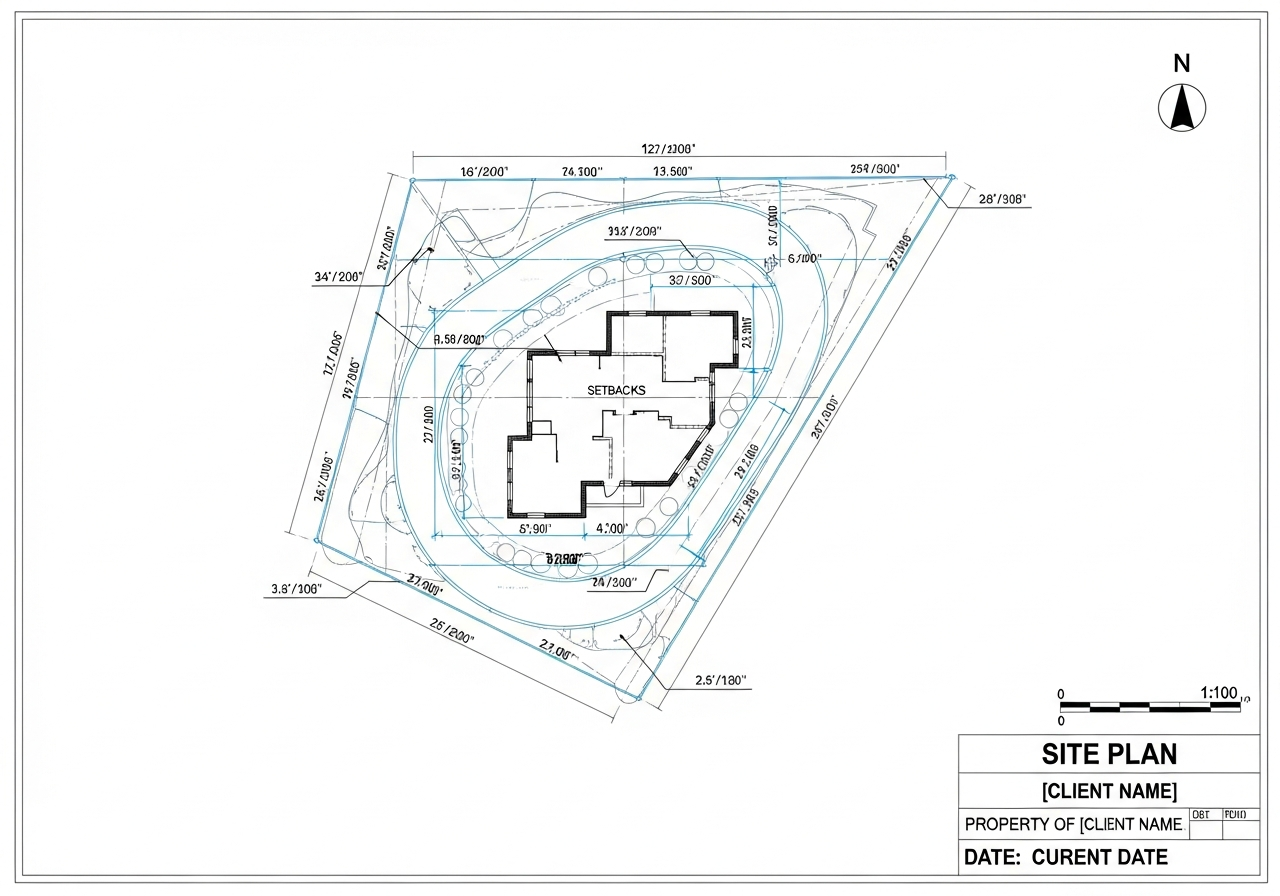
A typical Florida driveway permit package includes a site plan or survey showing the existing and proposed driveway with dimensions, the material specification and thickness, a drainage note or plan where required, and the contractor's license and insurance information.
If pavers are involved, some cities also ask for the manufacturer's specs; if a new curb cut is proposed, expect a right-of-way application alongside the building permit.
Get It Approved Before the Concrete Truck Arrives
Driveway violations are uniquely painful because the fix usually means demolition — you can't move a slab a foot to the left after it cures. Getting the permit first means the dimensions, drainage, and apron detail are approved before any concrete is poured.
At CORE GROUP we handle permit management across Florida: we confirm your city's driveway and right-of-way requirements, prepare the site plan and application, and manage the review through final inspection so your driveway is done once and done right.